XFEL: New milestone in superconducting undulator development
New milestone in superconducting undulator development
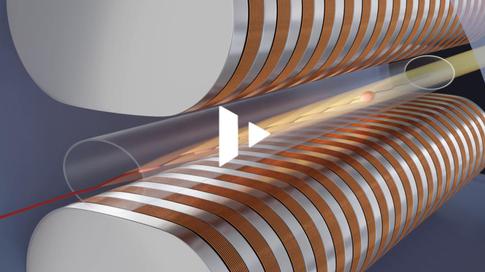
Generation of X-rays with permanent magnets and superconducting undulators (Animation: European XFEL)
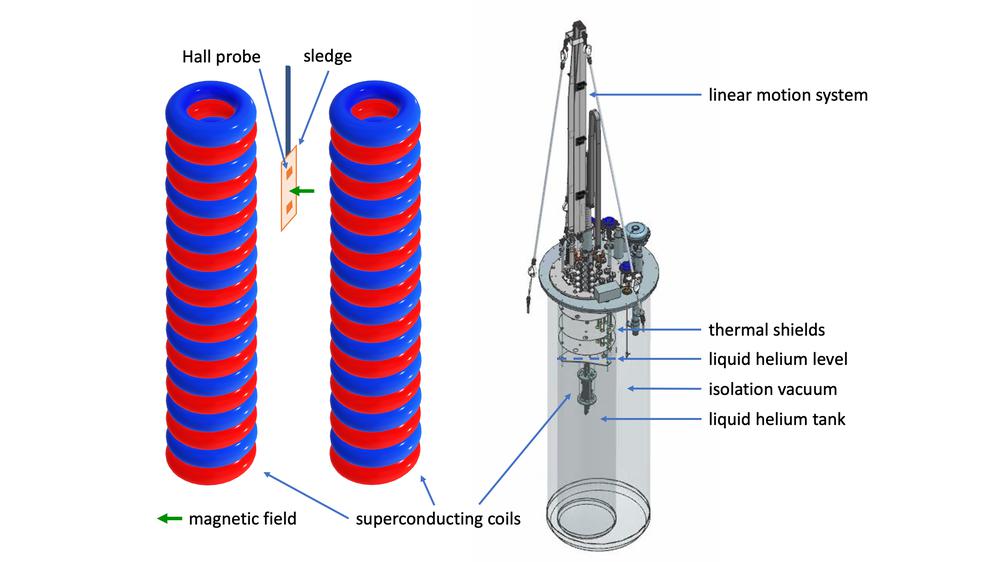
The SUNDAE1 test stand and a sketch of the sledge attached to a rod with Hall probes sliding along the magnetic field axis of the SCU coils (Illustration: S. Casalbuoni et al., Front. Phys. Sec. Interdisciplinary Physics Volume 11 - 2023).
The magnetic field of undulators is designed to be highly periodic, precisely controlled, and exceptionally uniform along the electron beam path. The electromagnets examined at European XFEL consist of niobium-titanium (NbTi) wire. At the operating temperature of -269 degrees Celsius, the material is superconducting, meaning it can carry very high electrical currents with virtually no resistance. When wound into coils with extreme precision, an electromagnet is created that produces a strong magnetic field when carrying an electric current. Measurements of their magnetic field have now been completed and show that the coils successfully reached the required operating current and produced the target magnetic field of 1.82 Tesla, while maintaining the necessary field quality for X-ray generation over the entire 2-metre length of the coils.
This is important because using the devices to generate X-rays relies not only on the magnetic fields being very strong, but also on them being highly periodic. Even tiny deviations from this periodic structure affect the quality of the X-ray beam generated. The qualification tests demonstrate that the coils can meet these demanding requirements over their full two-metre length, making them the longest high-precision superconducting undulator coils ever produced and measured.
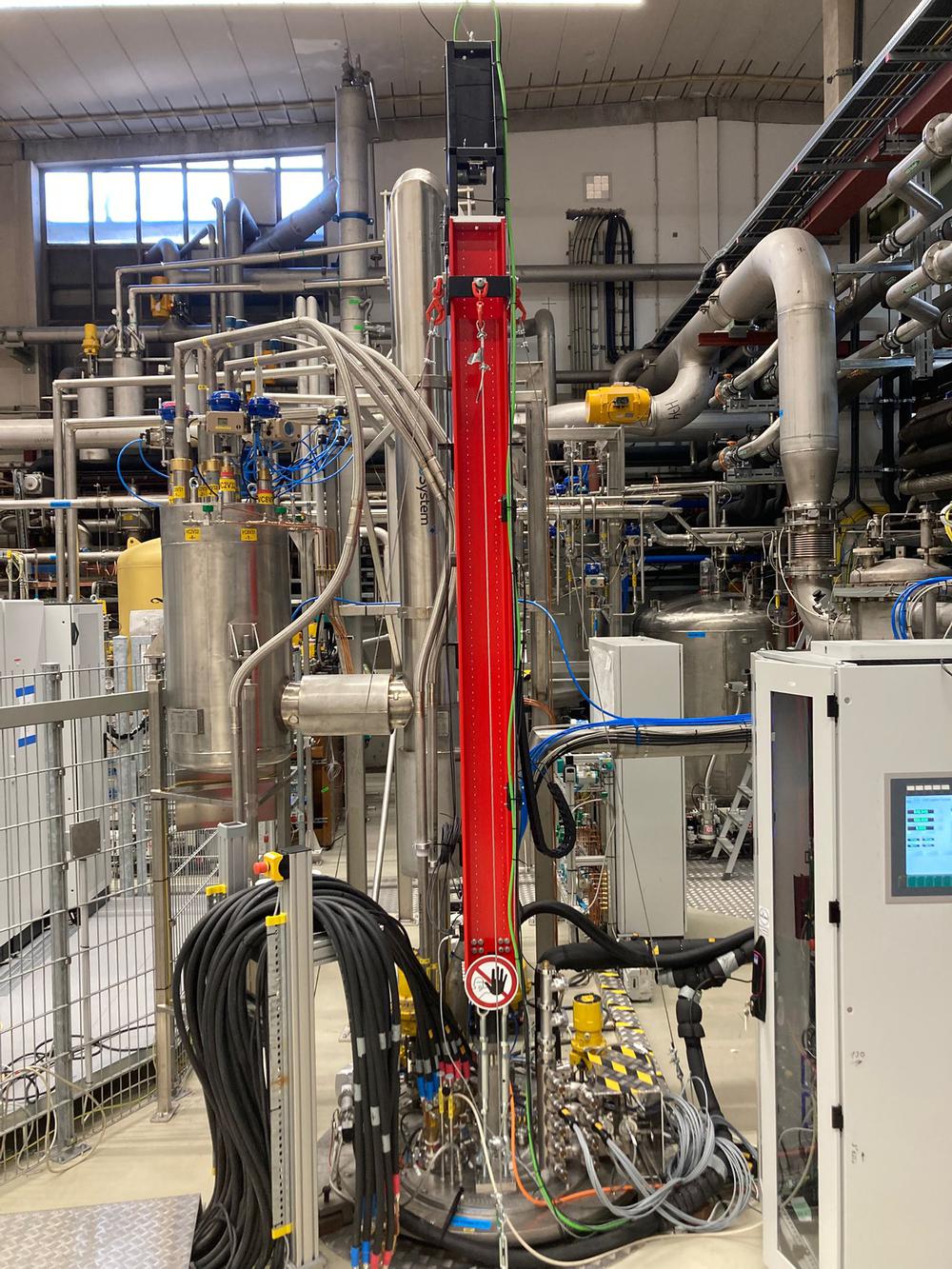
The SUNDAE1 setup at DESY (Photo: European XFEL)
The magnetic field measurements were conducted using the test stand SUNDAE1, developed for this purpose and located at DESY in Hamburg. Mounted vertically, each coil was immersed in a bath of liquid helium for the duration of the tests. Following the successful testing, the coils are ready to be installed in the S-PRESSO superconducting undulator prototype module.
Undulators force free electrons on a wavy path, causing them to emit X-ray light. Until now, they have typically used permanent magnets and operated at room temperature. Using superconducting technology based on NbTi wires enables the creation of magnetic fields that are approximately three times stronger than those of conventional systems. Following the prototype stage, a first set of superconducting undulators is intended to extend the capabilities of the European XFEL hard X-ray beamlines, enabling them to reach photon energies of over 30 kilo-electronvolts – potentially up to 60 or 70 kilo-electronvolts. Higher-energy X-rays will enable scientists to study matter in greater detail, including dense materials, and tiny structures that are difficult to access today. One of the European XFEL’s tunnels has recently been prepared for this future installation.
Video documenting the development of superconducting undulators at European XFEL:

